
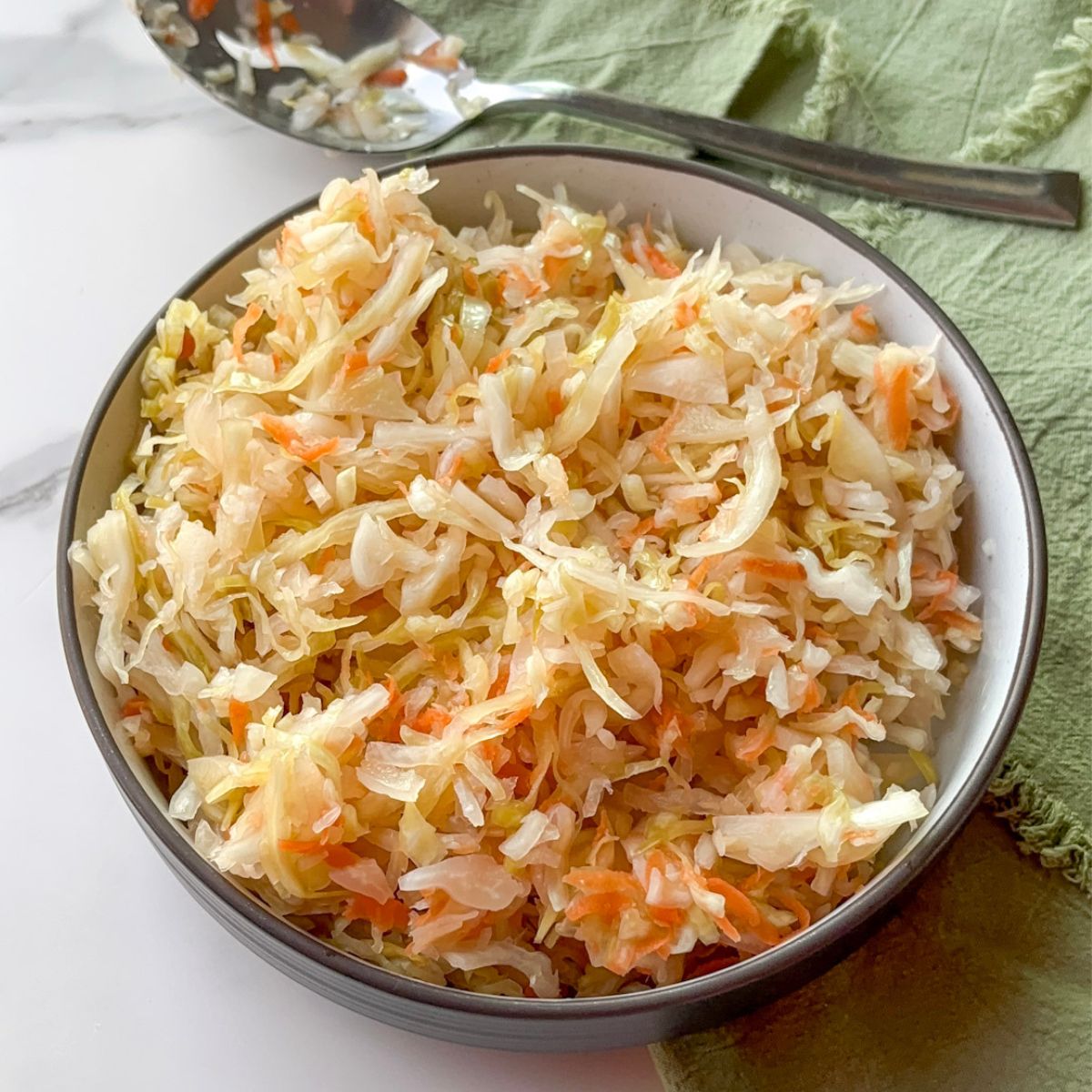
This homemade sauerkraut recipe is so easy to make! With only a few ingredients and some time, you will have a gut-friendly dish that not only tastes good but also fills your belly with nutritional, healthy goodness.
Why You'll Love This Recipe
I love all the benefits of sauerkraut. One of them being that this kraut is vegetarian and vegan friendly! A great way to add nutritious meals to the table. Here are some other reasons you might want to make this yummy salad.
Great Probiotic! A great way to keep your gut bacteria healthy.
Quick salad to have on hand! Growing up, my mom always made homemade sauerkraut in big batches. She would store it in the refrigerator for a fast, healthy salad on the side with mashed potatoes and a yummy pork stew.
Easy to make! If you are looking for an easy recipe, this one is for you. With just a few steps on day one, and a quick step for a few days to make the easiest sauerkraut ever! No special equipment is needed either.
Ingredients Needed
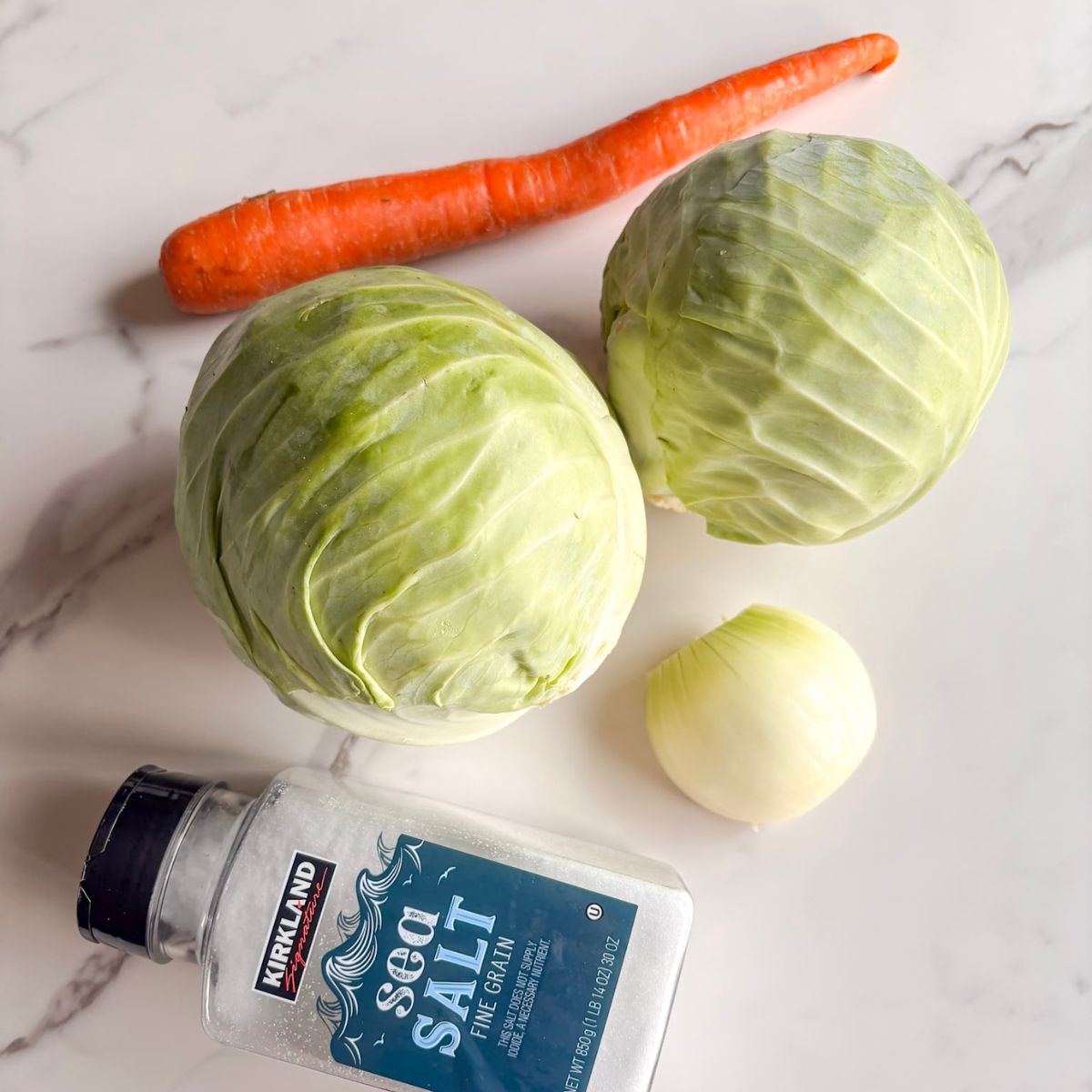
Green Cabbage. Grab some cabbage from the grocery store or the local farmers' market.
Onion. I like to add a smidge of onion to my sauerkraut, as it not only adds prebiotics and antioxidants but also, with fermentation, probiotics. With fermentation, onions are sweeter and tastier.
Carrot. Adding some color and sweetness with carrots.
Salt. This is the main ingredient for fermentation. It will release the brine from the cabbage, bringing out the beneficial bacteria and removing the harmful ones.
How To Make Sauerkraut
Making traditional sauerkraut at home is simple. Here are the steps I use to make homemade kraut.
Step 1: Peel the first few leaves off the cabbage and slice them into four wedges. Shred the cabbage using a vegetable slicer or by hand. Depending on how you like your cabbage - cruncy or soft, you will slice the cabbage that way.
If you like crunchy sauerkraut, slice the cabbage into slightly thicker, 2-3-inch-long pieces. I like to do this by hand using a butcher knife.
If you like sauerkraut on the softer side, use a vegetable slicer or mandoline to slice into super-thin strips.
Step 2: Peel the onion and slice it into thin strips using the vegetable slicer or mandoline.
Step 3: Peel the carrot using a potato peeler. Shred the carrot using a box grater.
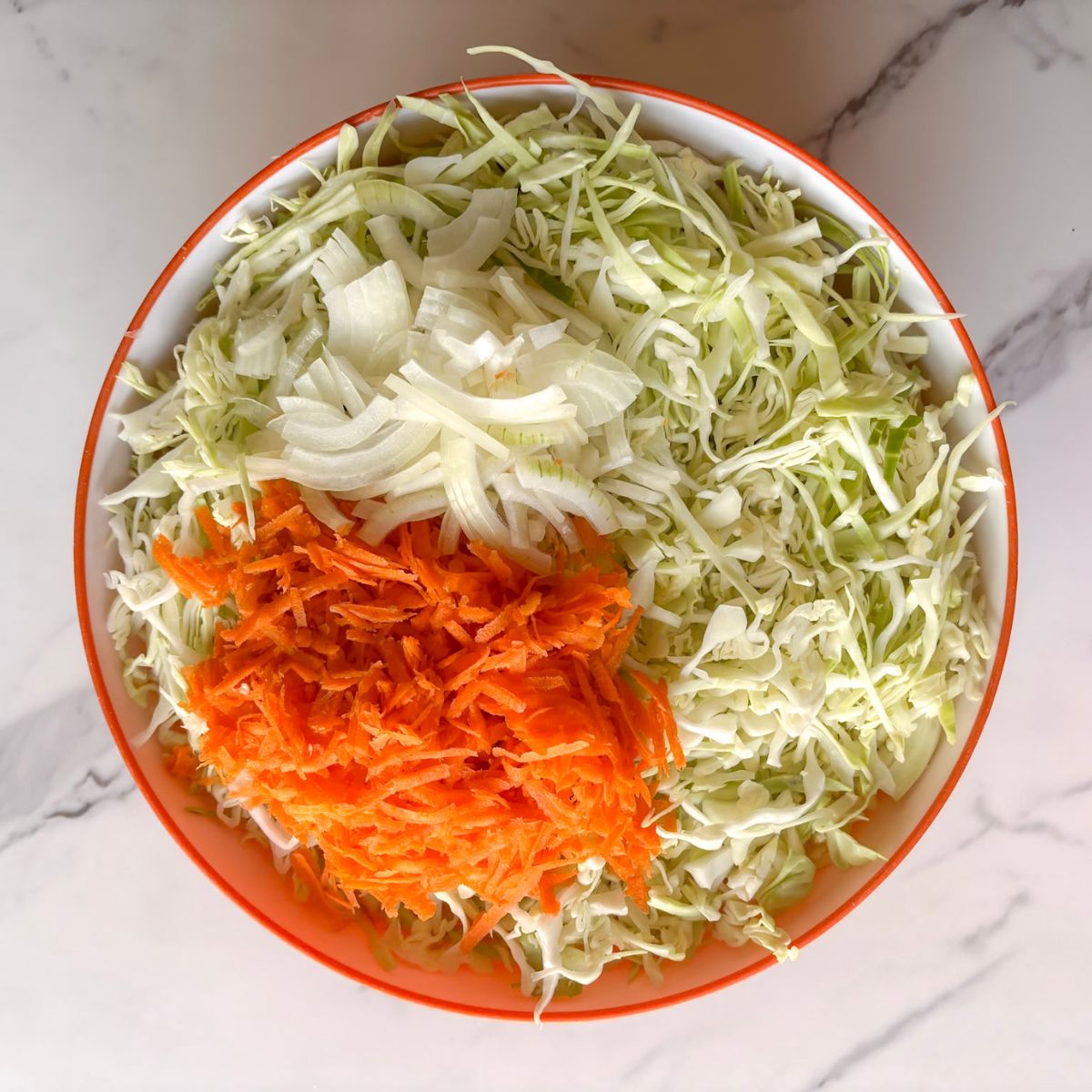
Step 4: Add the salt to the vegetables. Using a sauerkraut pounder or another similar tool, pound the cabbage with the onion and carrot until the cabbage begins to release juice.
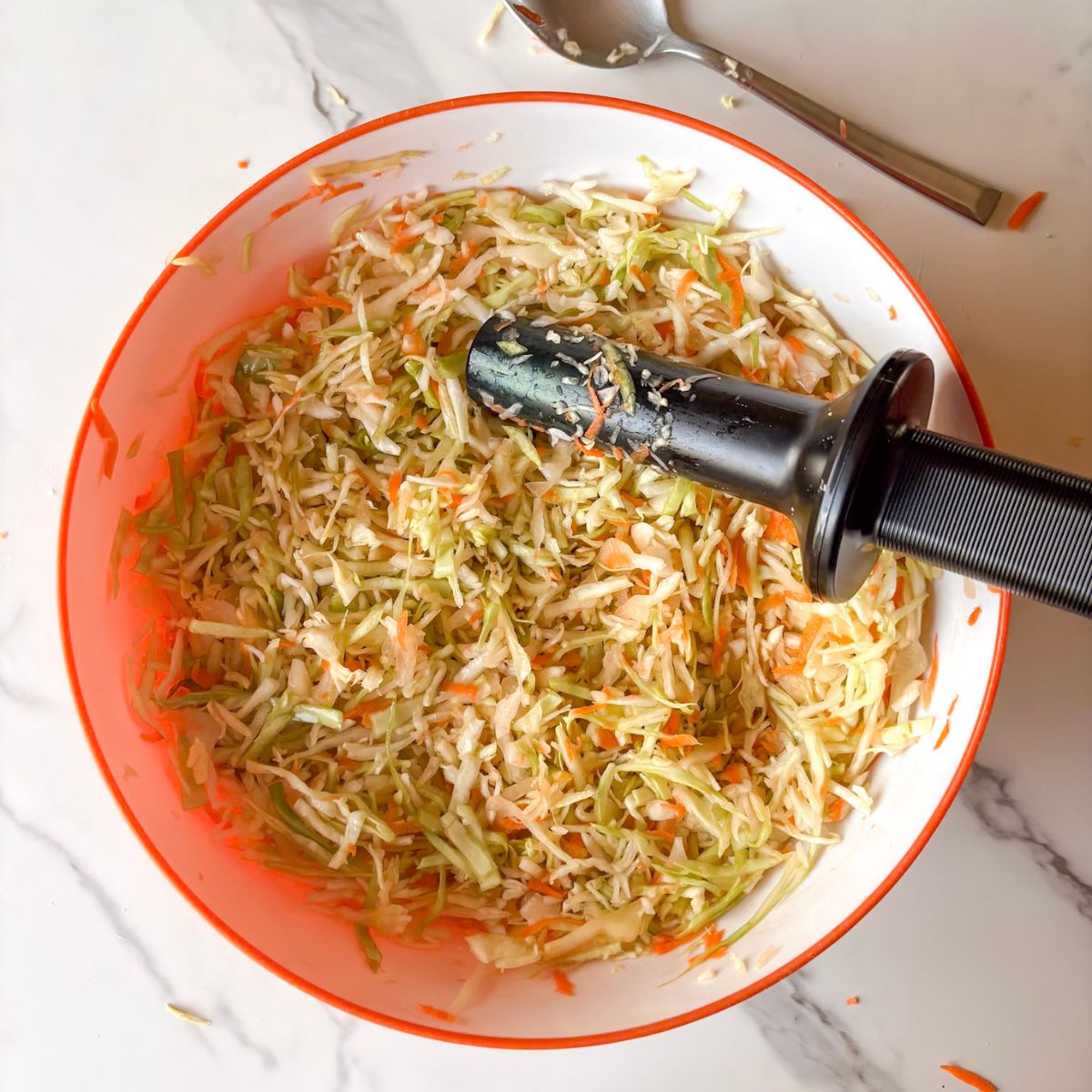
Step 5: Transfer the cabbage into a jar or tall container. Here are the containers I use, which are perfect for storage as well. Push the cabbage down into the jar or container until it is completely submerged in the brine, leaving no air pockets.
Step 6: Place the lid on top of the jar or container loosely, allowing some air in. Leave in room temperature for 3-4 days.
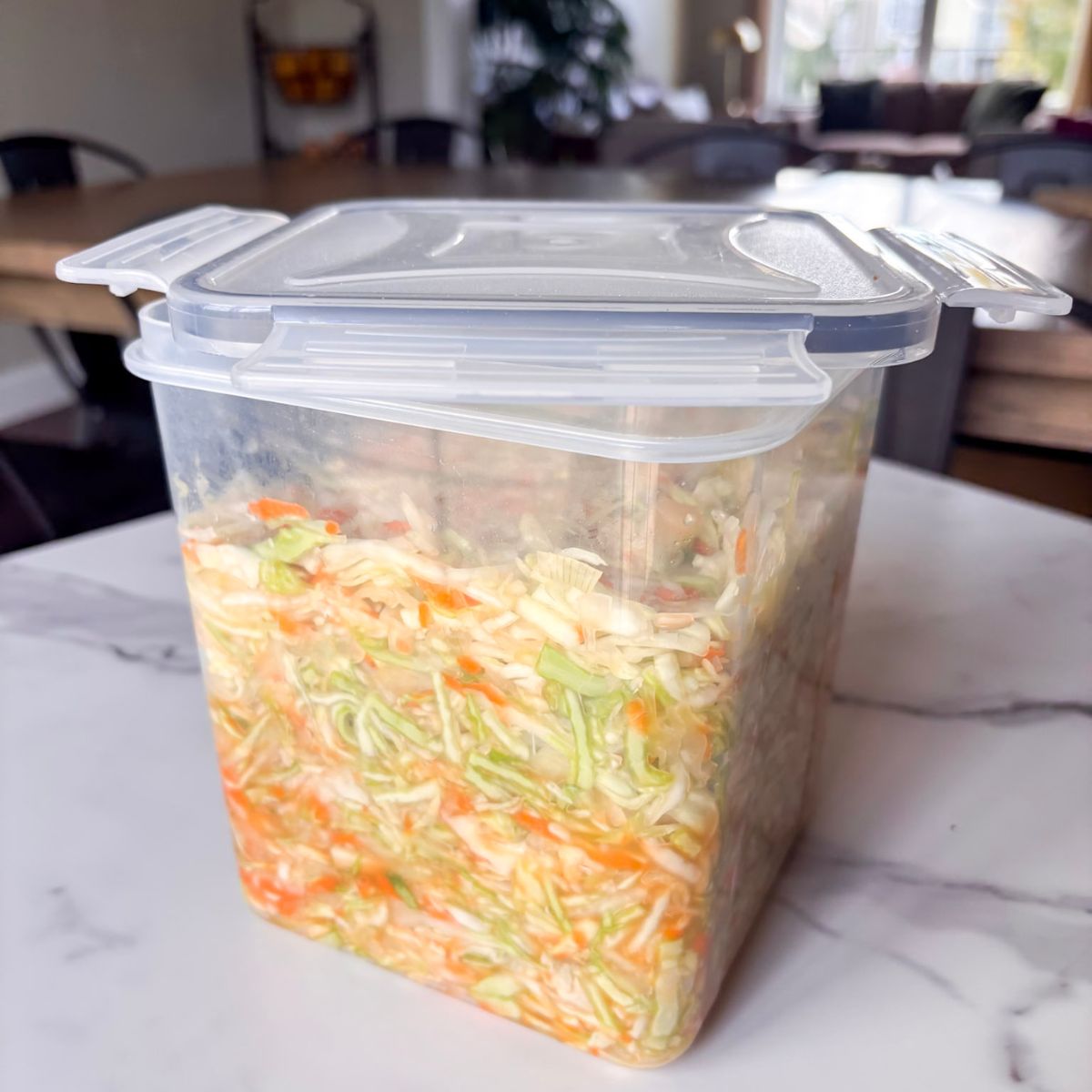
Step 7: Daily, pierce 3-5 holes all the way down to the bottom of the jar or container in the cabbage using a long skewer. I use wooden skewers with the dull side down. This releases the bubbles from the fermentation process.

Step 8: Once your cabbage starts to smell sour (not spoiled), it is done and ready to be refrigerated. Place an airtight lid on the jar or container and put it in the fridge.
NOTE: You can leave the sauerkraut longer than 4 days, allowing it to become tangier to your liking.
How Long To Store Sauerkraut in the Refrigerator
Sauerkraut can be stored in the refrigerator for a long time, slowly fermenting, about 3-6 months. The longer it is stored, the tangier it will get. Just keep that in mind.
I do not recommend freezing sauerkraut, as it will kill its probiotic properties and make it taste mushy.
How to Serve Sauerkraut
- Sandwich - A great Reuben sandwich made with your very own kraut!
- Side Salad - Pair with any meal as a side salad straight from the jar. This recipe goes well with pierogi, stews, casseroles, and more.
- Condiment - Great way to spice up the burger, hot dog, or sausage.
Simple Homemade Fresh Sauerkraut Recipe
This homemade sauerkraut recipe is so easy to make! With only a few ingredients and some time, you will have a gut-friendly dish that not only tastes good but also fills your belly with nutritional goodness.
- Prep Time: 20 minutes
- Total Time: 3 days
- Yield: 4 cups 1x
Instructions
Step 1: Peel the first few leaves off the cabbage and slice them into four wedges. Shred the cabbage using a vegetable slicer or by hand. Depending on how you like your cabbage - cruncy or soft, you will slice the cabbage that way.
If you like crunchy sauerkraut, slice the cabbage into slightly thicker, 2-3-inch-long pieces. I like to do this by hand using a butcher knife.
If you like sauerkraut on the softer side, use a vegetable slicer or mandoline to slice into super-thin strips.
Step 2: Peel the onion and slice it into thin strips using the vegetable slicer or mandoline.
Step 3: Peel the carrot using a potato peeler. Shred the carrot using a box grater.
Step 4: Add the salt to the vegetables. Using a sauerkraut pounder or another similar tool, pound the cabbage with the onion and carrot until the cabbage begins to release juice.
Step 5: Transfer the cabbage into a jar or tall container. Here are the containers I use, which are perfect for storage as well. Push the cabbage down into the jar or container until it is completely submerged in the brine and there are no air pockets.
Step 6: Place the lid on top of the jar or container loosely, allowing some air in. Leave in room temperature for 3-4 days.
Step 7: Daily, pierce 3-5 holes all the way down to the bottom of the jar or container in the cabbage using a long skewer. I use wooden skewers with the dull side down. This releases the bubbles from the fermentation process.
Step 8: Once your cabbage starts to smell sour (not spoiled), it is done and ready to be refrigerated. Place an airtight lid on the jar or container and put it in the fridge.


Elena says
This sauerkraut recipe is amazing! The perfect balance between the salt and a little sweetness from the carrots. Not your store bought sourness at all! 10/10 I will definitely be making this recipe again! Not just one more time, but have it on rotation!